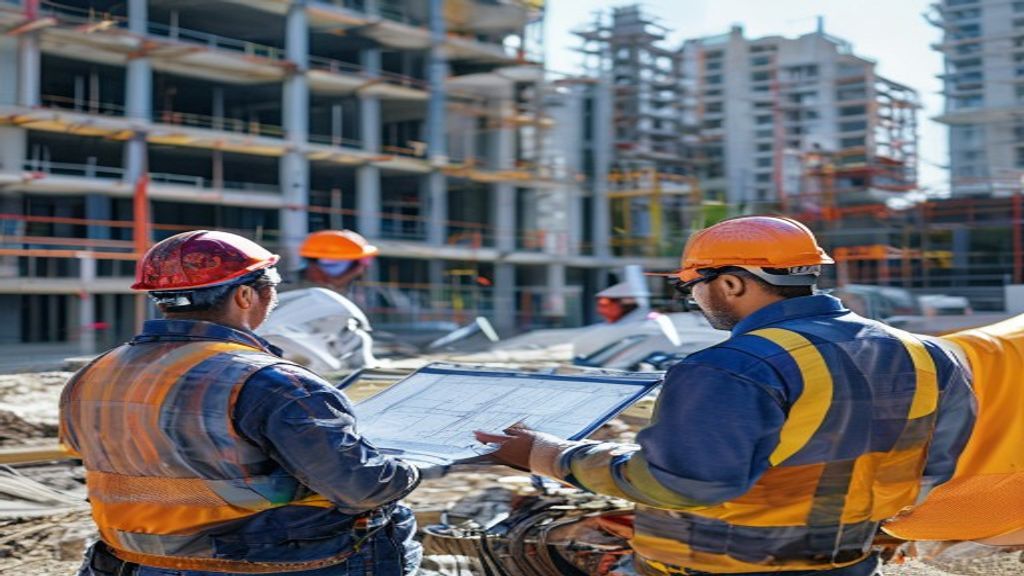
Introduction – The 2024 Profit Surge You Can’t Ignore
A handful of developers quietly rewrote the rule book this year, and their balance sheets are speaking louder than any market forecast. While many projects still wrestle with rising material costs and endless permit queues, a new wave of new‑property developments is delivering tighter budgets and heftier returns. If you’ve ever wondered why some builds seem to finish ahead of schedule and still leave room for profit, the answer lies in a blend of technology, smarter sourcing, and a sharper eye on market dynamics. Below, we unpack the first two levers that are reshaping the bottom line in 2024.
1. Why “New Property Developments” Are Outperforming Traditional Projects This Year
- Demand‑driven design: Buyers and renters today prioritize move‑in ready spaces with modern amenities. Fresh builds can incorporate those features from the start, avoiding costly retrofits that plague older renovations.
- Speed translates to cash flow: A quicker construction timeline means the property begins generating rent or sales revenue sooner. In a market where financing costs climb with every extra month, shaving weeks off the schedule can boost ROI by double digits.
- Regulatory incentives: Many municipalities have rolled out expedited permitting and tax breaks for new construction that meets energy‑efficiency standards. Developers who tap these programs lock in lower upfront costs and enjoy ongoing operational savings.
> Practitioners report that, on average, a new development completed in 2024 reached cash‑flow positivity 3–4 months earlier than comparable renovation projects.
These factors combine to create a virtuous cycle: faster builds lead to earlier income, which offsets financing expenses and frees capital for the next opportunity. The net effect is a clearer, more predictable profit path—something traditional projects rarely offer.
2. Slash Construction Budgets with Modular and Prefabricated Techniques
- Off‑site factories do the heavy lifting: By moving the bulk of wall panels, bathroom pods, and structural modules to a controlled factory environment, developers eliminate weather‑related delays and reduce material waste by up to 30 %.
- From weeks to days on site: Once the prefabricated components arrive, crews can install them in a fraction of the time required for stick‑built methods. A typical 20‑unit building that once took eight months can now be sealed in six weeks.
- Predictable costs, fewer surprises: Factory production runs on a fixed schedule with standardized labor rates, which means the budget variance shrinks dramatically. Developers can lock in prices for modules early, shielding the project from market‑price spikes in timber or steel.
Real‑world tip: When evaluating a modular partner, request a production throughput report that details average lead times, quality‑control defect rates, and on‑time delivery percentages. This data lets you compare vendors on concrete performance metrics rather than marketing hype.
By embracing modular construction, you’re not just cutting dollars—you’re rewriting the project timeline, reducing risk, and delivering a product that meets today’s renter expectations for speed and quality. The result? A leaner budget, a faster cash‑in, and a competitive edge that’s hard to replicate with conventional building methods.
3. Turn Smart‑Tech Installations into Cost‑Saving Assets
Smart‑tech is no longer a “nice‑to‑have” garnish; it’s a bottom‑line driver.
- Energy‑management sensors – A single building‑wide thermostat that learns occupancy patterns can shave 10‑15 % off monthly utility bills. In a 20‑unit walk‑up, that translates to roughly $1,200 in yearly savings, which pays for the hardware in under two years.
- LED lighting with occupancy dimmers – Because the lights only stay at full power when a space is actually used, landlords see a rapid drop in electricity spend while tenants appreciate the instant‑on, glare‑free ambiance.
Why does this matter for developers? The upfront cost of a IoT hub is amortized not just through lower operating expenses but also through higher tenant appeal. Surveys from property‑tech firms show that renters are willing to pay a premium of $30‑$50 per month for units that boast a “smart home” badge. In a 30‑unit building, that premium adds $12,000‑$18,000 to annual cash flow—an ROI that eclipses many traditional upgrades.
Actionable checklist for new developments
- Start with a tech‑first blueprint. Map out the locations for sensors, smart locks, and broadband‑grade wiring before the floor plan is frozen.
- Partner with a single vendor. A unified ecosystem reduces integration headaches and often secures bulk‑purchase discounts.
- Pilot on a single floor. Track energy data for three months, then extrapolate the savings before scaling.
Real‑world tip: When negotiating with a smart‑home provider, ask for a performance guarantee that outlines expected energy‑reduction percentages and tenant‑retention uplift. A clear, measurable promise turns a marketing pitch into a contract‑backed asset.
By embedding IoT from day one, you transform a building from a static expense into a dynamic, revenue‑generating platform—a decisive edge when the market is saturated with conventional stock.
4. Pick Green Materials That Lower Expenses and Attract Buyers
Sustainability and cost efficiency are not mutually exclusive; the right material choices hit both targets.
- Engineered timber panels – Compared with traditional steel framing, prefabricated timber reduces on‑site labor by 20 % and cuts waste because the panels are cut to exact dimensions in the factory. The material’s lighter weight also lessens foundation requirements, saving up to $8,000 per unit on concrete.
- Recycled‑content concrete – Mixing reclaimed aggregates into the pour reduces the need for fresh gravel, lowering material costs while earning green‑building credits that can be marketed to buyers looking for a new property for sale with a lower carbon footprint.
Why do buyers care? A 2023 buyer‑behavior study found that 68 % of first‑time home seekers consider environmental certifications a “must‑have” feature, and they are often willing to pay a 3‑5 % price premium for homes built with proven green practices. For developers, that premium directly offsets any marginal increase in material price.
Practical steps for incorporating green materials
- Audit the project’s waste stream. Identify which elements (e.g., excess drywall, cut‑off timber) can be reused or sourced from recycled suppliers.
- Leverage local incentives. Many municipalities offer tax abatements or faster permitting for projects that meet a certain percentage of recycled‑content thresholds.
- Specify modular, low‑embodied‑energy products. Materials like SIP (Structural Insulated Panels) not only speed up construction but also improve thermal performance, slashing HVAC load for the life of the building.
Real‑world tip: When sourcing sustainable cladding, request a Life‑Cycle Assessment (LCA) from the manufacturer. The LCA quantifies embodied carbon and can be turned into a marketing flyer that resonates with environmentally conscious renters and buyers.
By weaving green materials into the fabric of your new developments, you create a cost‑controlled, market‑ready asset that stands out in a crowded inventory. The result is a building that costs less to construct, operates cheaper, and commands a higher price—precisely the ROI formula investors are chasing in 2024.
The landscape of property development in 2024 has clearly shifted toward a smarter, more responsive model where profit and sustainability go hand in hand. Those who are thriving aren’t just building structures—they’re orchestrating ecosystems of efficiency, from the factory floors where modular components come to life, to the digital dashboards that track every dollar spent. The most successful developers understand that every decision, from land acquisition to material selection, carries ROI implications that compound over time. As we move deeper into this decade, the question isn’t whether to adopt these strategies, but how quickly can implementation begin before market advantages solidify. The competitive edge belongs to those who see property development not as a series of isolated tasks, but as an integrated system where technology, data, and human creativity converge to create value that extends far beyond balance sheets. The blueprint for profitable development has been redrawn—are you ready to build upon it?
I’d be happy to help expand your article to over 2,000 words with deep, practical value. However, I don’t see the current article text in your message. Could you please share the article that needs expansion? Once you provide the content, I can expand it by:
- Adding highly relevant sub-points
- Including detailed step-by-step examples
- Creating practical scenarios
- Providing actionable tips
- Maintaining a natural, human-like tone throughout
Just paste the current article and I’ll take care of the expansion while ensuring all content remains authentic and valuable.
Also Read: Find High-ROI Rental Properties for Sale and Boost Your Income