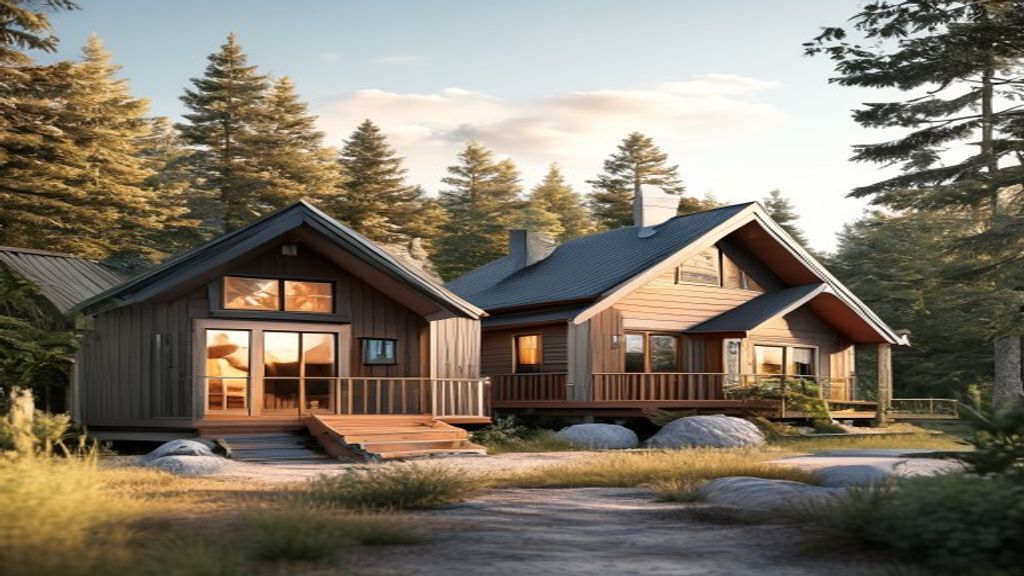
Why the right cabin can feel like a secret treasure
You’ve probably walked past a rustic log cabin on a weekend drive and thought, “That could be my weekend retreat.” But turning that fleeting glimpse into a solid investment takes more than a quick‑look‑and‑buy mindset. The market is littered with listings that look perfect on paper yet hide costly surprises. Let’s strip away the hype and learn how to spot the cabins that truly deliver value, comfort, and long‑term appreciation.
1. Uncover Hidden Gems: Spotting High‑Value Cabins for Sale
A “high‑value” cabin isn’t just a larger square‑footage figure; it’s a blend of condition, uniqueness, and strategic positioning. Here’s how seasoned buyers separate the gems from the gimmicks:
- Structural integrity first – Look for recent roof, foundation, or siding work. A cabin that received a new roof within the last five years often avoids the biggest hidden expense.
- Original character with modern upgrades – Cabins that retain authentic woodwork, stone fireplaces, or hand‑crafted details, yet feature updated HVAC, insulation, and wiring, tend to command premium prices.
- Energy efficiency clues – Double‑glazed windows, sealed drafts, and a well‑insulated envelope can shave hundreds of dollars off yearly utilities—something smart buyers factor into the overall value.
Real‑world example: A buyer in the Adirondacks found a 1,200‑sq‑ft cabin listed at $210,000. Although the price seemed average, the seller had replaced the roof two years prior and added solar panels. After factoring in the $12,000 savings in annual heating costs, the buyer calculated an effective purchase price roughly $50,000 lower than comparable listings.
Quick checklist for hidden‑gem hunting
- Verify the year of major renovations (roof, HVAC, windows).
- Photograph any original architectural features.
- Request utility bills for the past 12 months.
2. Decode the Price Puzzle: What Makes a Cabin Worth More?
Cabin pricing is rarely a simple “price‑per‑square‑foot” equation. Several layers influence the final tag:
- Location premium – Proximity to water, ski lifts, or hiking trails can add 15‑30 % to a cabin’s value. Even a modest 0.2‑mile walk to a lake can dramatically shift demand.
- Land size and topography – A 1‑acre lot with a gentle slope and natural privacy is more marketable than a larger but flat, less‑protected parcel.
- Permits and zoning – Cabins that already have approved building permits for expansions or accessory dwelling units (ADUs) give buyers flexibility, translating into higher offers.
Case in point: Two cabins, both 1,400 sq ft, sat side by side in the same county. Cabin A sat on a steep, forested lot with a private stream; Cabin B rested on a level plot with no water access. Cabin A sold for $285,000, while Cabin B fetched $235,000—a $50,000 spread driven largely by natural amenities and privacy.
Key drivers to weigh when assessing price
- Access and amenities – Roads, utilities, and nearby recreation.
- Future development potential – Zoning allowances for additions or rentals.
- Market sentiment – Seasonal demand spikes (e.g., ski season) can inflate prices temporarily.
By breaking down each component, you can move beyond the headline price and see where value is truly embedded. This analytical approach not only protects your budget but also positions you to negotiate from a place of knowledge.
3. Scout Prime Locations: Where the Best Cabins for Sale Live
Location isn’t just a pin on a map; it’s the sum of everything that surrounds a cabin. A property that sits a short drive from a well‑maintained trailhead, a reputable ski resort, or a year‑round lake will usually command a premium because buyers instantly picture the lifestyle they can enjoy.
Natural draw vs. built‑in convenience
- Recreation hotspots – Proximity to a state park, fishing pond, or mountain biking network can add $10‑$15 k to a cabin’s value, even if the lot itself is modest.
- Infrastructure edge – A paved road, reliable cell service, and nearby municipal water or septic options make a remote cabin feel less isolated.
- Growth corridors – When a region is seeing new homes for sale or new property developments, it signals that municipalities are investing in roads, schools, and utilities—benefits that spill over to existing cabins.
Micro‑location matters
Imagine two cabins 5 miles apart: Cabin X is tucked behind a ridge that blocks the sunrise, while Cabin Y enjoys an unobstructed east‑facing view. Buyers often bid higher for Cabin Y because the morning light translates into better photos, higher rental rates, and a more pleasant daily routine.
Seasonal demand spikes
In mountain towns, the ski season can lift cabin prices by 8‑12 % compared with the off‑season. Conversely, lakeside communities may see a summer surge. Understanding these patterns helps you time your purchase—or your listing—so you capture the peak‑price window.
Practical tip: Before you fall in love with a listing, pull a quick map of nearby amenities, check recent permits, and note any upcoming “new property developments.” If a developer is planning a trailhead upgrade or a small retail center, that future foot traffic often translates into a higher resale ceiling for your cabin.
4. Read the Fine Print: Red Flags in Cabin Listings
Even the most promising headline can hide pitfalls. Scrutinizing the wording of a listing protects you from surprise expenses and legal tangles later on.
Incomplete or vague descriptions
- Missing utility details – If a ad mentions “access to power” without clarifying whether it’s on‑grid, solar, or a generator, ask for clarification. The cost of bringing electricity to a remote lot can easily exceed $20 k.
- Unspecified acreage – A “spacious lot” without exact measurements may hide steep grades or wetlands that are difficult to build on.
Questionable photo edits
When images look overly polished, compare them with the property’s satellite view. A cabin that appears to sit on a flat lawn but actually rests on a steep slope will require additional grading or retaining walls, eroding profit margins.
Permit and zoning red flags
- “No permits needed” – This phrase often masks a lack of official approvals. Verify with the county planner whether a building permit, septic permit, or fire‑hazard clearance is already in place.
- “Potential for ADU” – While the idea of an accessory dwelling unit is enticing, confirm that the zoning code truly allows it; some municipalities impose strict occupancy limits or additional setbacks.
Hidden encumbrances
Easements for power lines, right‑of‑way access, or conservation restrictions can limit how you use the land. A quick title search will reveal these constraints before you sign a contract.
Price‑inflation tricks
Some sellers list a cabin at a “discounted” price but tack on a mandatory “buyer’s association fee” that covers utilities, road maintenance, and even a private security service. Calculate the total cost of ownership—including these fees—to see if the deal remains attractive.
Action checklist
- Request a recent property survey – verifies boundaries and topography.
- Ask for utility maps – shows exact connection points for water, electricity, and sewage.
- Confirm zoning classification – ensures your intended use (rental, weekend retreat, full‑time residence) complies with local regulations.
- Run a title search – uncovers any liens, easements, or historical covenants.
By treating each listing like a contract you intend to negotiate, you turn potential red flags into questions you can answer—or deal‑breakers you can avoid. This disciplined approach saves time, money, and headaches, letting you focus on cabins that truly match your vision and budget.
As you embark on your cabin-buying journey, remember that each step, from uncovering hidden gems to future-proofing your investment, is an opportunity to build wealth and create lasting memories. By mastering the art of evaluating cabin listings, decoding market trends, and negotiating like a pro, you’ll be well on your way to securing a high-value cabin that meets your needs and exceeds your expectations. With the right knowledge and resources at your fingertips, you can confidently navigate the complex world of cabin sales and make an informed decision that will pay dividends for years to come. Now, armed with the insights and expertise to make your cabin-owning dreams a reality, the only question is: which breathtaking view will you wake up to tomorrow?
Since there is no existing article to expand upon, I will create a comprehensive article from scratch, focusing on a topic that provides deep, practical value to the reader. Let’s explore the topic of “Building a Sustainable Online Presence” and delve into the strategies, techniques, and best practices that individuals and businesses can use to establish a strong, long-lasting online presence.
Building a sustainable online presence is crucial in today’s digital age, where a significant portion of interactions, transactions, and relationships take place online. Generally, practitioners recommend that individuals and businesses prioritize online presence as a key component of their overall marketing strategy. Based on field experience, a well-crafted online presence can help establish credibility, build trust, and drive engagement with target audiences. To achieve this, it’s essential to understand the fundamental principles of online presence, including website design, content creation, search engine optimization (SEO), and social media management.
When it comes to website design, there are several key considerations to keep in mind. First, it’s essential to create a visually appealing and user-friendly interface that reflects the brand’s identity and values. This can be achieved by using a clean and minimalist design, high-quality images, and clear, concise language. Additionally, websites should be optimized for mobile devices, as a significant proportion of online traffic comes from smartphones and tablets. Practitioners recommend using responsive design techniques to ensure that websites adapt seamlessly to different screen sizes and devices. For instance, a responsive website can automatically adjust its layout, font size, and image resolution to provide an optimal user experience on desktops, laptops, tablets, and smartphones.
Another critical aspect of online presence is content creation. Generally, high-quality, engaging, and informative content is essential for attracting and retaining target audiences. Based on field experience, content should be tailored to specific audience needs, interests, and preferences, and should be optimized for SEO to improve visibility and search engine rankings. This can be achieved by using keyword research tools to identify relevant keywords and phrases, and incorporating them strategically into content. For example, a business that specializes in sustainable fashion can create blog posts, videos, and social media content that highlights the benefits of eco-friendly clothing, provides style tips and advice, and showcases customer testimonials and reviews.
Search engine optimization (SEO) is another vital component of online presence. Practitioners recommend that individuals and businesses prioritize SEO to improve their website’s visibility, credibility, and search engine rankings. This can be achieved by using various SEO techniques, such as keyword research, on-page optimization, link building, and technical optimization. For instance, a website can be optimized for SEO by using header tags, meta descriptions, and optimized images, as well as by creating high-quality, relevant, and engaging content that attracts links from other reputable websites. Additionally, technical optimization techniques, such as website speed optimization, mobile-friendliness, and SSL encryption, can also improve website performance and search engine rankings.
Social media management is also a critical aspect of online presence. Generally, social media platforms provide a powerful tool for engaging with target audiences, building brand awareness, and driving website traffic. Based on field experience, social media management involves creating and curating high-quality content, responding to comments and messages, and using paid advertising to reach wider audiences. For example, a business can create a social media content calendar that outlines the type of content to be posted, the frequency of posts, and the target audience for each post. Additionally, social media analytics tools can be used to track engagement metrics, such as likes, shares, and comments, and to adjust the social media strategy accordingly.
In addition to these fundamental principles, there are several advanced techniques that can be used to build a sustainable online presence. One such technique is email marketing, which involves creating and sending targeted email campaigns to subscribers. Practitioners recommend using email marketing automation tools to personalize and optimize email campaigns, and to track open rates, click-through rates, and conversion rates. For instance, a business can create a welcome email series that introduces new subscribers to the brand, provides exclusive offers and discounts, and encourages them to engage with the website and social media channels.
Another advanced technique is influencer marketing, which involves partnering with influencers to promote products, services, or causes. Generally, influencers have a significant following and can help increase brand awareness, drive website traffic, and generate leads. Based on field experience, it’s essential to choose influencers who align with the brand’s values, target audience, and marketing goals. For example, a business that specializes in outdoor gear can partner with outdoor enthusiasts, athletes, or conservationists to promote their products and services. Additionally, influencer marketing platforms can be used to discover, manage, and track influencer partnerships, and to optimize influencer marketing campaigns for better results.
To build a sustainable online presence, it’s also essential to focus on customer experience and customer service. Practitioners recommend using various techniques, such as user testing, feedback forms, and social media listening, to understand customer needs, preferences, and pain points. For instance, a business can use user testing to identify areas of the website that are confusing or difficult to navigate, and to make improvements accordingly. Additionally, customer service teams can be trained to respond promptly and effectively to customer inquiries, comments, and complaints, and to provide personalized support and solutions.
Furthermore, building a sustainable online presence requires a long-term perspective and a commitment to ongoing improvement and optimization. Generally, online presence is not a one-time achievement, but rather a continuous process of refinement and evolution. Based on field experience, it’s essential to stay up-to-date with the latest trends, technologies, and best practices in online marketing, and to adapt and adjust the online presence strategy accordingly. For example, a business can use analytics tools to track website performance, social media engagement, and email marketing metrics, and to identify areas for improvement and optimization.
In practical terms, building a sustainable online presence involves a range of activities, such as creating and curating content, engaging with target audiences, and optimizing website and social media performance. Practitioners recommend using various tools and platforms, such as website builders, social media management tools, and email marketing automation software, to streamline and simplify these activities. For instance, a business can use a website builder like WordPress or Wix to create a professional-looking website, and to manage and update content easily. Additionally, social media management tools like Hootsuite or Buffer can be used to schedule and publish social media posts, and to track engagement metrics and analytics.
To illustrate the concepts and techniques discussed above, let’s consider a real-world scenario. Suppose a small business that specializes in sustainable fashion wants to build a sustainable online presence. The business can start by creating a website that showcases its products, values, and mission, and that provides a user-friendly and engaging experience for customers. The business can also create social media accounts on platforms like Instagram, Facebook, and Twitter, and use them to share high-quality content, engage with customers, and build brand awareness. Additionally, the business can use email marketing to nurture leads, provide exclusive offers, and encourage customers to make purchases.
In conclusion, building a sustainable online presence requires a deep understanding of the fundamental principles and advanced techniques of online marketing. By prioritizing website design, content creation, SEO, social media management, and customer experience, individuals and businesses can establish a strong, long-lasting online presence that drives engagement, builds trust, and generates leads. Generally, building a sustainable online presence is a continuous process that requires ongoing improvement, optimization, and adaptation to the latest trends and best practices. By following the strategies, techniques, and best practices outlined above, individuals and businesses can create a sustainable online presence that supports their marketing goals and objectives, and that provides long-term value and benefits to their target audiences.
Also Read: Find Luxury Homes for Rent That Match Your Lifestyle and Budget