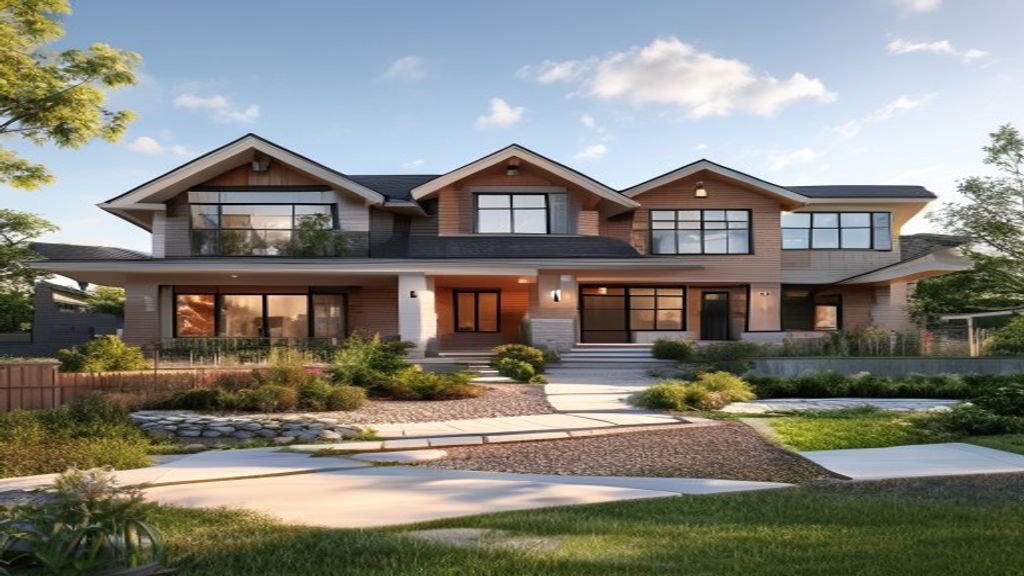
The Sweet Spot: Why a Brand‑New Home Can Save You Thousands
You’ve probably walked past a freshly painted “New Construction” sign and thought, “That’s nice, but isn’t a resale just as good?” The truth is, a brand‑new home often carries hidden financial advantages that a resale simply can’t match. Below we unpack the hard‑won reasons the market favors fresh builds, and then show you how to zero in on the neighborhoods where those advantages actually materialize.
1. Why “Brand New Homes for Sale” Beat Resale Listings – The Financial Edge
- Lower Immediate Repair Costs
A brand‑new house arrives with a fresh roof, new HVAC system, and untouched cabinetry. Homeowners typically spend $5,000‑$15,000 on first‑year repairs for older properties. Skipping that bill can be the difference between a modest mortgage payment and one that comfortably fits your budget.
- Energy‑Efficiency Savings
Modern building codes demand better insulation, tighter windows, and high‑efficiency appliances. A homeowner who chooses a 2023‑built home can see utility bills drop 10‑20 % compared with a 2000‑era resale. Over a five‑year horizon, those savings easily add up to several thousand dollars.
- Builder Incentives That Cut the Sticker Price
Developers often offer cash‑back concessions, upgraded finishes, or covering closing costs to move inventory. Those perks are rarely available on resale homes, where the seller’s motivation is limited to a single price point.
- Predictable Depreciation Curve
New homes depreciate at a slower, more linear rate during the first few years. Resale properties can lose value quickly if the surrounding area ages or if hidden issues surface. Buying new gives you a clearer picture of future equity growth.
Real‑world snapshot: A couple in Austin purchased a newly constructed townhome with $8,000 in builder credits toward closing costs. Their resale‑home alternative would have required a $12,000 repair budget just to bring the kitchen up to modern standards. The net effect? Roughly $20,000 saved in the first year alone.
2. Pinpoint the Hotspots: How to Identify Neighborhoods with Fresh‑Built Value
- Track Permit Activity
– City planning departments publish building permits weekly. A surge in permits within a zip code usually signals upcoming new‑home inventory.
– Example: In Charlotte’s “Uptown West” district, permits jumped 45 % in Q1 2024, prompting a wave of starter‑home projects.
- Watch Infrastructure Investments
– New schools, transit lines, or commercial hubs attract developers. When a city council approves a Light Rail extension, surrounding parcels often become prime for fresh construction.
– Case in point: The extension of Phoenix’s Valley Metro Rail led developers to launch three new‑build communities within a half‑mile radius, each offering price‑competitive units.
- Analyze Builder Portfolios
– Large, reputable builders (e.g., D.R. Horton, Lennar) publish their upcoming project maps. Cross‑referencing these maps with your target city can reveal micro‑neighborhoods where new homes will appear soon.
– Tip: Subscribe to builders’ newsletters; they sometimes announce “pre‑launch” pricing that’s lower than the eventual market rate.
- Leverage Real‑Estate Data Platforms
– Tools like Zillow’s “New Construction” filter or Redfin’s “Builder Listings” let you isolate fresh builds instantly. Pair the filter with median price trends to ensure the area isn’t overpriced.
- Listen to Local Real‑Estate Agents
– Agents specializing in new construction have a pulse on which subdivisions are still under‑subscribed and which are slated for price adjustments. A quick coffee chat can surface leads you won’t find online.
Practical step: Create a simple spreadsheet with columns for “Zip Code,” “Permit Count (last 12 mo),” “New Infrastructure Projects,” and “Builder Presence.” Rank each zip code on a 1‑5 scale; those scoring 4 or higher are your hot‑spot candidates.
By combining public data, builder intel, and on‑the‑ground conversations, you can map out neighborhoods where fresh‑built value isn’t just a promise—it’s a proven pattern. This groundwork lets you move from “I’m interested in new homes” to “I’m targeting the exact blocks that will save me thousands.”
3. Decoding Builder Incentives: Hidden Savings You Can Leverage Today
When a developer rolls out a new build development, the price tag you see isn’t the whole story. Builders often bundle upgrade credits, “pay‑for‑your‑closing‑costs” offers, or temporary mortgage‑rate buy‑downs to keep momentum in a competitive market. The trick is to treat every perk as a negotiable line item rather than a static giveaway.
How to uncover and cash in on these incentives
| Incentive Type | What It Looks Like | How to Activate It |
|—————-|——————-|——————-|
| Upgrade Packages | Free kitchen island, premium flooring, or upgraded appliances. | Ask the sales rep for the “upgrade allowance” and request the items you value most; many builders will shift the budget toward your choices if you commit to a quick close. |
| Closing‑Cost Assistance | $5‑$10 k covered at settlement. | Verify whether the assistance is a direct credit or a “price‑adjusted” reduction—credits are more flexible for later negotiations. |
| Rate Buy‑Downs | Builder pays points to lower your mortgage rate for the first 3‑5 years. | Request a written “rate‑buy‑down” clause; compare the long‑term savings against any higher base price before signing. |
| Home‑Warranty Extensions | Extra years of structural coverage beyond the standard builder warranty. | Ask for a written extension; the added peace of mind often translates into a few thousand dollars of implicit value. |
Actionable tip: When you receive a sales brochure, highlight any bolded “special offer” language, then call the builder’s incentives department. “I’m ready to move forward if we can align on a $7 k upgrade credit and a 0.25 % rate buy‑down—what can you do?” is a conversation starter that many first‑time buyers overlook.
Real‑world example: A couple in Austin was eyeing a 2‑bedroom townhome listed at $329 k. By asking for the standard $10 k upgrade credit and negotiating a $3 k closing‑cost contribution, they shaved off roughly $13 k in out‑of‑pocket expenses, while still staying within their budget.
The bottom line: Builder incentives are rarely “take‑it‑or‑leave‑it.” By cataloguing what’s on the table and matching each perk to your personal priorities, you turn vague marketing speak into concrete dollars saved.
4. Master the Timing Game – When New‑Construction Inventory Peaks (and Prices Dip)
Just as a savvy shopper waits for seasonal sales, a homebuyer can wait for inventory windows when new‑construction supply spikes and builders feel the pressure to move units. Historically, the third quarter (July‑September) sees a surge of completed homes as developers finish spring‑time groundbreaks, while the end of the calendar year often brings “year‑end clearance” pricing to hit sales targets.
Key timing signals to watch
- Permit volume spikes – A sudden rise in building permits filed with the county usually precedes a wave of new build homes for sale within the next 6‑9 months.
- Model‑home open houses – When a builder starts showcasing multiple model homes, they’re typically readying a batch of units for sale and may offer “open‑house specials.”
- Quarter‑end financial reporting – Builders disclose their quarterly sales goals; a shortfall can trigger extra discounts or added incentives to close the gap.
Practical steps to ride the wave
- Set up alerts on the builder’s website for “new inventory” notifications.
- Track local permit data (most counties publish this online) and plot the monthly count; a rising trend signals upcoming availability.
- Engage a buyer’s agent who monitors the builder’s sales calendar—agents often learn about price‑adjustment windows before they hit public listings.
Timing in action: In Phoenix, a buyer who watched the city’s building‑permit dashboard noticed a 30 % jump in permits for a particular subdivision in March. By the time the first units hit the market in May, the builder announced a “spring‑release rebate” of $8 k. The buyer’s agent leveraged that rebate alongside a modest upgrade credit, landing the home at a net price well below the original asking price.
Remember, the goal isn’t to rush in the first month a development appears, but to align your purchase with the moment inventory abundance meets builder urgency. When you time your offer right, the same new build home can cost thousands less simply because the market dynamics are working in your favor.
As you embark on your journey to find the perfect brand new home, remember that the key to unlocking thousands of dollars in savings lies in understanding the intricacies of the new construction market. By mastering the art of identifying hotspots, decoding builder incentives, and navigating the timing game, you’ll be well on your way to securing your dream home at a price that fits your budget. The tools and strategies outlined here will empower you to make informed decisions, avoid common pitfalls, and turn builder perks into valuable credits. With the right approach, you can transform the home-buying process into a rewarding experience that sets you up for long-term financial success. Now, with your newfound knowledge, you’re ready to start exploring the latest brand new homes for sale, and as you do, consider this: what will you do with the thousands of dollars you’re about to save?
Also Read: Villa for Sale in the Gulf